

Rubber Materials
Rubber-based gasket materials are widely used across industries because they provide flexibility, durability, and reliable sealing under moderate temperatures and pressures. These materials are commonly found in automotive systems, filtration equipment, food-processing machinery, robotics, and power-generation equipment.
-
EPDM
 EPDM (ethylene propylene diene monomer) is widely used in gasket manufacturing due to its excellent resistance to weathering, ozone, and water-based chemicals. It performs well in environments where exposure to steam, water, and outdoor conditions is common.
EPDM gaskets maintain flexibility across a wide temperature range and resist cracking or degradation caused by environmental exposure. However, EPDM is not recommended for environments containing petroleum oils, fuels, or many hydrocarbons.
Typical benefits of EPDM material include:
- Excellent weather resistance. Performs well in outdoor environments exposed to UV and ozone.
- Strong water and steam resistance. Suitable for cooling systems, plumbing components, and water-handling equipment.
- Wide temperature range. Maintains sealing properties in both hot and cold conditions.
-
Nitrile
Nitrile rubber, also known as Buna-N, is a widely used gasket material for applications involving petroleum-based fluids. Its resistance to oils, fuels, and hydraulic fluids makes it common in automotive, industrial equipment, and power systems.
Nitrile gaskets offer a balance of durability, chemical resistance, and affordability, which makes them a practical choice for many industrial sealing applications. However, they are less suitable for prolonged exposure to ozone, sunlight, or certain weather conditions.
Key advantages of nitrile rubber include:
- Strong oil and fuel resistance. Ideal for hydraulic systems, fuel handling equipment, and industrial machinery.
- Good abrasion resistance. Maintains sealing performance in mechanical systems with moderate movement or vibration.
- Cost-effective performance. Provides reliable sealing without the higher cost of specialty elastomers.
-
Neoprene
Neoprene gasket materials are valued for their versatility. Neoprene combines moderate chemical resistance with strong durability, making it useful across a wide variety of industries. Many engineers select neoprene when an application requires resistance to oils, weather exposure, and moderate chemicals. They are frequently used in HVAC systems, electrical enclosures, and general industrial equipment.
Common benefits of neoprene gasket materials include:
- Balanced chemical resistance. Performs well with oils, refrigerants, and many industrial chemicals.
- Good weather and ozone resistance. Suitable for outdoor equipment and exposed machinery.
- Mechanical durability. Maintains sealing integrity under compression and vibration.
Specialty Materials
High temperatures, aggressive chemicals, and extreme pressures may exceed the capabilities of standard rubber materials. In these situations, specialty materials provide the durability required for demanding industrial systems.
-
PTFE
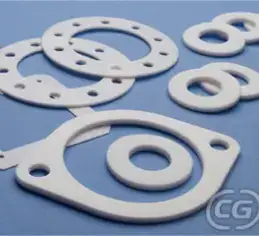
 PTFE gasket materials are widely recognized for their exceptional chemical resistance. PTFE (polytetrafluoroethylene) is compatible with a wide range of chemicals, acids, solvents, and corrosive fluids.
Because of this broad chemical compatibility, PTFE gaskets are commonly used in chemical processing, electronics manufacturing, pharmaceutical production, and filtration systems. PTFE also performs well across a wide temperature range. However, it can be less elastic than rubber materials and may require careful design to maintain proper sealing pressure.
Advantages of PTFE gasket materials include:
- Outstanding chemical resistance. Compatible with most aggressive chemicals and solvents.
- Low-friction surface. Reduces wear and improves performance in certain sealing environments.
- High purity. Suitable for food processing and pharmaceutical applications.
-
Graphite
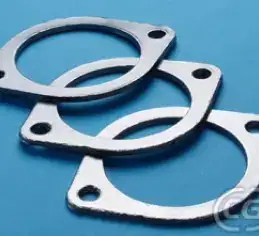
Graphite gasket materials are often selected for high-temperature sealing environments. Unlike many elastomers, graphite maintains stability under extreme heat while still providing effective sealing performance.
These gaskets are commonly used in power generation systems, exhaust systems, high-temperature piping, and heavy industrial equipment. Graphite materials are particularly useful in applications where traditional elastomer gaskets would degrade quickly from high-temperature exposure.
Key advantages of graphite gasket materials include:
- Excellent heat resistance. Performs reliably in high-temperature industrial environments.
- Strong compressibility. Conforms well to surface irregularities for effective sealing.
- Long-term stability. Maintains performance during prolonged exposure to heat and pressure.
-
Viton
Viton gasket materials belong to a class of high-performance fluoroelastomers known for their strong resistance to chemicals, fuels, and elevated temperatures.
Industries such as automotive, aerospace, and chemical processing frequently use Viton gasket materials when systems must handle aggressive fluids or high operating temperatures. While Viton offers outstanding performance, it is typically more expensive than standard rubber gasket materials.
Advantages of Viton gaskets include:
- Excellent chemical resistance. Performs well with fuels, oils, and many industrial chemicals.
- High temperature capability. Maintains sealing performance in demanding environments.
- Long service life. Resists degradation caused by heat, oxidation, and chemical exposure.
Selection Considerations
Selecting the right gasket material requires evaluating the specific conditions within your system. While material properties provide general guidance, the success of a sealing solution depends on how well the material matches the operating environment.
-
Temperature
 Rubber materials typically perform well in moderate temperature environments, while specialty materials such as graphite or Viton may be required for high-heat applications. Continuous exposure to temperatures beyond a material’s rated range can cause hardening, cracking, or seal failure.
When specifying gasket materials, consider both normal operating temperatures and potential temperature spikes during system operation.
-
Chemical Exposure
 Oils, fuels, solvents, acids, and cleaning agents can all interact differently with gasket materials. Evaluating chemical compatibility early in the design process helps prevent premature gasket degradation and system leaks.
For example:
- Nitrile rubber performs well with oils and fuels.
- EPDM is well-suited for exposure to water and steam.
- PTFE provides compatibility with a broad range of aggressive chemicals.
-
Environmental Stress
Environmental factors such as UV exposure, moisture, vibration, and pressure cycles can influence gasket performance over time.
Outdoor equipment may require materials that resist ozone and weather exposure, while machinery with constant vibration may require materials that maintain compression and elasticity under mechanical stress.
 Rubber materials typically perform well in moderate temperature environments, while specialty materials such as graphite or Viton may be required for high-heat applications. Continuous exposure to temperatures beyond a material’s rated range can cause hardening, cracking, or seal failure.
 Oils, fuels, solvents, acids, and cleaning agents can all interact differently with gasket materials. Evaluating chemical compatibility early in the design process helps prevent premature gasket degradation and system leaks.
 Environmental factors such as UV exposure, moisture, vibration, and pressure cycles can influence gasket performance over time.
Choosing the Right Gasket Material for Your Application
Selecting the right gasket material requires balancing performance, durability, and cost. Each material offers unique advantages depending on the operating environment and equipment requirements.
If you are evaluating gasket materials for an upcoming project, the team at Custom Gasket Manufacturing can help you select the right compound and fabrication method for your application. Submit an RFQ to explore available materials and production capabilities.